
TIWN Feb 14, 2026
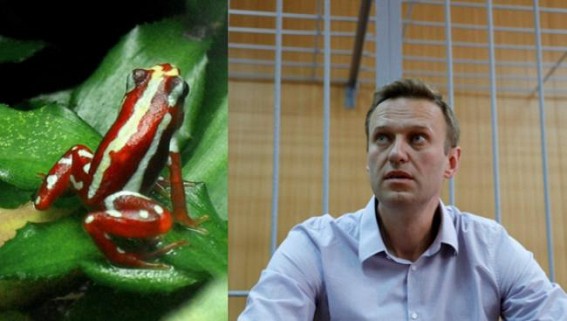
In a shocking development marking the second anniversary of Alexei Navalny's death, five European governments—the United Kingdom, Sweden, France, Germany, and the Netherlands—released a joint statement on February 14, 2026, accusing Russia of murdering the prominent opposition leader using epibatidine, a rare and extremely potent dart frog toxin.
Navalny, a fierce critic of Russian President Vladimir Putin, died suddenly on February 16, 2024, while serving a lengthy sentence in a remote Arctic penal colony. Russian officials claimed the cause was natural, but the new European findings point to deliberate poisoning with this lethal neurotoxin.
What Is the Dart Frog Toxin Used in Alexei Navalny's Alleged Murder?
The toxin in question is epibatidine, a powerful alkaloid naturally secreted by certain species of poison dart frogs (family Dendrobatidae), particularly those in the genus Epipedobates (such as Anthony’s poison arrow frog, Epipedobates anthonyi), native to South American countries like Ecuador and Peru.
Key facts about epibatidine:
- It is a nicotine-like neurotoxin that acts on nicotinic acetylcholine receptors, leading to severe effects including muscle paralysis, convulsions, seizures, slowed heart rate, respiratory failure, and rapid death.
- Epibatidine is estimated to be 100 to 200 times more potent than morphine as an analgesic, but its extreme toxicity has blocked any medical use despite early research into painkillers, asthma treatments, or other applications.
- In the wild, poison dart frogs obtain epibatidine from their diet; captive-bred frogs do not produce it.
- The toxin is not naturally present in Russia or anywhere outside specific South American habitats.
- It can be synthesized in a laboratory, which European officials believe was the method employed, as importing live frogs or the toxin would be traceable.
Analyses of samples from Navalny's body, conducted by national laboratories in the five countries, "conclusively confirmed the presence of epibatidine." Given its lethality and Navalny's reported symptoms before death, the governments stated that poisoning was highly likely the cause.
The joint statement emphasized: "Only the Russian state had the means, motive, and opportunity to administer this lethal toxin" during his imprisonment in Siberia. They have formally reported Russia to the Organization for the Prohibition of Chemical Weapons (OPCW), alleging a violation of the Chemical Weapons Convention.
Background on Alexei Navalny's Death and Ongoing Controversy
Navalny survived a previous poisoning attempt in 2020 involving the nerve agent Novichok, which he publicly blamed on the Kremlin. His 2024 death in prison reignited suspicions of foul play.
Yulia Navalnaya, Navalny's widow, supported the findings, describing epibatidine as "one of the deadliest poisons on earth" and confirming her husband endured a painful death from the toxin.
Russia has rejected the accusations as "Western propaganda" and an "information campaign," denying any involvement.
This revelation, issued amid the Munich Security Conference, highlights escalating Russia-West tensions over Navalny's case and broader issues of political repression.
The use of such an exotic, lab-synthesizable toxin raises serious questions about state-sponsored assassination methods and international accountability. As investigations continue, the world watches for further developments in this high-profile case.
- U.S. Grants India 30-Day Waiver To Buy Russian Oil As Iran War Drives Crude Prices Near $87
- Iran’s Islamic Regime Chooses Slain Supreme Leader’s Son as Successor: Israel Lists Him for ‘Elimination’
- Ayatollah's Wife Is Dead
- Modi Recalls Genocide of Jewish Community: What Does Modi’s Visit to World Holocaust Center Symbolize?
- Macron's Visit to India Aims at Trade, AI, Bollywood, Student Visas, and Defense and Cultural Aspects
Special Articles
 Sanjay Majumder
 Anirban Mitra