
TIWN
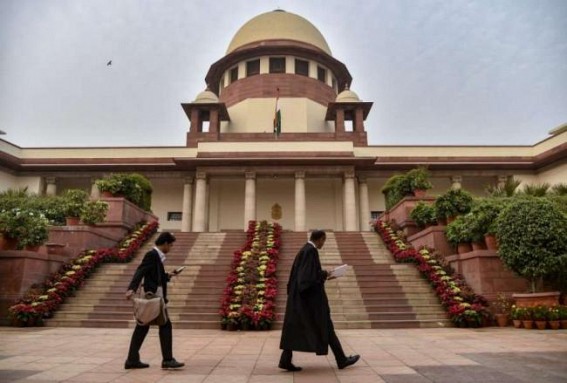
New Delhi, March 3 (TIWN) The UN Human Rights Council has moved an intervention application in the Supreme Court criticizing the Citizenship Amendment Act, as it puts Muslim migrants at risk and also has issues of reasonableness and objectivity, which may not be in sync with India's commitment to international covenants.
The application was filed by Michelle Bachelet Jeria, the UN High Commissioner for Human Rights (the High Commissioner). The High Commissioner has sought to intervene as amicus curiae (third-party) in the case, citing her mandate to protect and promote all human rights and to conduct necessary advocacy established pursuant to the UN General Assembly resolution.
"While reducing the risk of refoulment for certain communities, the CAA unequally places other communities at such risk. Accordingly, the narrow scope of the CAA, which extends protection from return only on religious grounds and limited to the specific ethno-religious groups, may not be sufficiently objective and reasonable in light of the broad prohibition of refoulment under international human rights law," said the High Commissioner in the application. The application said that for the purpose of this intervention application, in the present case, the question is therefore not a matter of the general purpose of the law, but whether the differentiation drawn within the law (CAA), namely the exclusion of persons from the scope of the law, on the basis of their religion is sufficiently objective and reasonable.
- Mamata Banerjee Detained by Delhi Police During Jantar Mantar Protest
- Dhruv Rathee detained from Gurugram home before CJP protest
- Trump, Netanyahu Praise Indian Pilot Smit Machchhar; PM Modi Speaks to His Family
- LeT Terrorist Killed in Encounter in J&K’s Budgam
- India Govt Supports Supreme Court Move to Legally Bar Minors From Social Media
Special Articles
 Sanjay Majumder
 Anirban Mitra